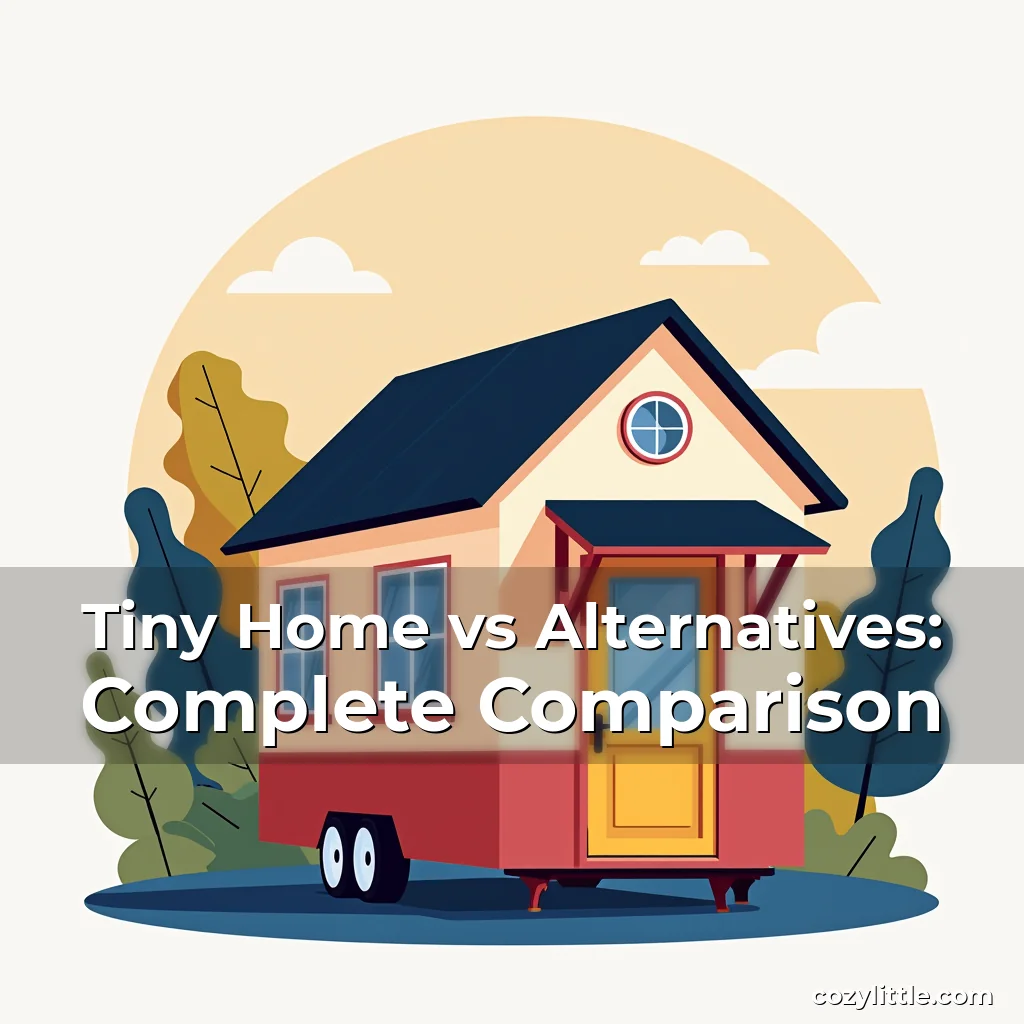
Tiny Home vs Alternatives: Complete Comparison
In recent years, the concept of downsizing living spaces has captured the imagination of millions worldwide, sparking debates and discussions across various communities and media outlets. This surge in interest stems from diverse motivations—including economic factors, environmental consciousness, and lifestyle preferences. Among the many options available, tiny homes have emerged as a compelling choice for those seeking freedom, creativity, and a simpler way of life.
The appeal of tiny homes lies not just in their size but also in the transformative potential they offer. From reducing monthly expenses to promoting sustainable living, tiny homes challenge traditional notions of what it means to live comfortably. However, selecting a tiny home over other housing solutions involves weighing numerous variables, including cost, legality, and long-term viability. By exploring these dimensions systematically, we can better understand whether a tiny home truly aligns with your aspirations—or if another option might be more suitable.
What Defines a Tiny Home?
A tiny home typically refers to a compact dwelling designed to maximize functionality despite its limited square footage. While there is no universally agreed-upon size threshold, most tiny homes range between 100 to 400 square feet. These structures are engineered to blend innovation with minimalism, incorporating multi-functional furniture, strategic spatial organization, and advanced insulation technologies.
The core idea behind tiny homes is intentional living. Unlike conventional houses built for family expansion, tiny homes emphasize self-sufficiency and adaptability. They cater to individuals who value mobility, seek reduced debt burdens, or wish to simplify their lives by eliminating excess belongings. The emphasis shifts from material accumulation toward experiences and meaningful relationships—with nature, neighbors, and oneself.
- Design Focus:** Tiny homes prioritize open floor plans, fold-out beds, Murphy tables, and wall-mounted storage units to optimize space efficiently.
- Mobility Options:** Many tiny homes are mounted on trailers, enabling owners to relocate seasonally or permanently, though fixed-site designs exist as well.
- Sustainability Features:** Incorporation of compost toilets, rainwater collection systems, and renewable energy sources helps minimize environmental impact.
Comparing Tiny Homes with Conventional Housing
Traditional residential properties generally span upwards of 1,500 square feet, offering expansive rooms, dedicated bathrooms, kitchens, garages, and ample outdoor space. While this layout suits families or individuals preferring luxury amenities, it also translates into significantly higher upfront costs, ongoing mortgage payments, insurance premiums, and property taxes.
Cost-wise, buying or renting a conventional home demands considerable financial commitment. In many regions, starter homes now require at least $250,000 in capital, whereas constructing or purchasing a tiny home can be achieved for less than half that amount. Furthermore, the total lifetime ownership costs—including utilities, repairs, and maintenance—are considerably lower in tiny homes due to decreased resource consumption.
Economic Advantages Over Time
Data shows that occupants of tiny homes save approximately $600–$800 annually on electricity alone compared to residents of average-sized homes. With no garage or large lawn to mow, upkeep becomes less time-consuming. Additionally, the absence of a mortgage allows for greater liquidity, freeing up funds for travel, education, or entrepreneurial ventures.
These financial efficiencies enable many tiny homeowners to adopt alternative incomes, such as remote work, freelancing, or gig economy jobs. Without being tied down geographically by real estate obligations, people gain unprecedented freedom to pursue lifestyles centered around passion rather than necessity.
Exploring Alternative Living Solutions
Beyond tiny homes and conventional residences lie other viable accommodations. Mobile homes, cabins, modular homes, co-housing arrangements—all present unique trade-offs depending on individual priorities. Understanding these variations aids in determining the best fit for particular circumstances.
Rentals provide temporary stability, but they usually come with restrictions regarding customization, pet policies, and tenure security. On the flip side, owning any type of home—even small ones—offers control over renovations and long-term value appreciation, assuming proper management of investments.
Differentiating Between RVs, Tiny Houses & Trailers
RVs (recreational vehicles) differ fundamentally from tiny homes since they’re primarily intended for leisure trips rather than permanent residence. Most states classify RVs differently legally—a distinction influencing everything from licensing requirements to eligibility for residency status.
Tiny homes constructed on trailers are sometimes mistaken for RVs; however, their construction standards and livability features distinguish them clearly. Tiny homes tend to feature more durable foundations, plumbing fixtures suited for year-round use, and interior layouts optimized for daily living comforts.
Advocates’ Perspectives & Challenges Faced
Lovers of tiny homes often cite emotional fulfillment derived from shedding clutter and embracing simplicity. Research conducted by The Tiny Life Foundation indicates that nearly two-thirds of respondents reported increased happiness post-move-in, attributing it largely to decluttered environments and stronger interpersonal connections.
Yet, this transition is not without obstacles. Initial setup difficulties arise frequently—especially finding suitable land zoned for habitation. Only select jurisdictions explicitly allow tiny homes as primary residences; others enforce outdated minimum-square-footage mandates, leading some enthusiasts into gray-area situations requiring creative problem-solving.
Navigating Legal Complexities
Understanding local zoning codes proves vital prior to embarking on building endeavors. Some places categorize tiny homes under accessory dwelling unit (ADU) classifications, which permit secondary occupancy alongside existing buildings provided certain conditions apply.
Innovative approaches include registering homes as manufactured housing units compliant with federal guidelines. Others build above-ground sheds equipped with full electrical hookups and secure locks—an increasingly accepted workaround where direct approval remains elusive.
Environmental Impact Considerations
One significant advantage attributed to tiny homes relates to their ecological footprint. Reduced surface area correlates directly with lesser energy expenditure—heating fewer rooms consumes far less fuel regardless of climate zone differences.
Closer examination reveals additional eco-benefits: lower transportation emissions thanks to lightweight chassis, minimized waste generation during production phases, and reuse initiatives involving salvaged materials incorporated throughout development stages.
- Renewable Energy Adoption:** Solar panels become more economical on smaller roofs, facilitating quicker payback periods when paired with battery backups.
- Water Conservation Measures:** Greywater recycling setups and low-flow faucets contribute substantially toward preserving fresh supplies amid global scarcity concerns.
Fostering Community Connections Through Smaller Spaces
The social dynamics associated with tiny living often yield richer interactions compared to isolated suburban neighborhoods typical of larger homes. Co-living models exemplify this phenomenon by pooling communal areas—shared kitchens, lounges, gyms—that foster deeper friendships based on common values rather than proximity alone.
Such arrangements don’t merely promote camaraderie; they also alleviate loneliness prevalent among modern urban populations. Shared responsibilities split across households lighten burdens otherwise borne exclusively by singles or couples confined solely within four walls night after night.
Potential Drawbacks Concerning Privacy
While communal elements enrich social fabric dramatically, privacy becomes paramount consideration worth addressing upfront. Clear expectations surrounding quiet hours, visitor etiquette, and personal boundaries must establish early on prevent future friction.
To mitigate issues stemming from proximity constraints, designers implement soundproofing techniques and strategically place private retreat corners within communal living zones ensuring everyone maintains sufficient respite whenever desired.
Cultural Shifts Driving Growth in Popularity
The rise of digital nomad culture coincides perfectly with growing enthusiasm for minimalist lifestyles championed by tiny homes movement proponents. As global connectivity continues improving accessibility internationally, more professionals opt working remotely allowing relocation anywhere conducive productivity yet fulfilling desire for adventure simultaneously.
This convergence encourages experimentation with hybrid lifestyles—combining digital careers with nomadic journeys supported logistically by mobile-based tiny homes equipped with reliable internet access, ergonomic furnishings, and curated wellness amenities catering travelers’ holistic health goals irrespective geographical destinations visited regularly.
Planning Your Own Path Forward
Before deciding definitively whether pursuing a tiny home makes sense personally, careful introspection guided thorough research remains imperative. Identifying core objectives informs decision-making process accurately preventing premature commitments misaligned underlying desires.
Consider questions such as preferred location, desired level involvement renovation efforts required assembling structure, anticipated number occupants needing shelter concurrently, availability nearby infrastructure services etcetera carefully formulate concrete vision helping discern optimal course action subsequently.
Conclusion
Tiny homes represent much more than mere architectural novelty—they signify paradigm shift toward prioritizing human experience over material acquisition traditionally upheld Western societies doctrines equating success measurable possessions amassment quantities owned.
If you’re contemplating simplification journey rooted empowerment purposeful living devoid excesses defining traditional paradigms then tiny home might serve ideal vessel guiding transformation successfully realizing dreams concisely efficiently sustainably meeting tomorrow’s evolving world’s complex demands gracefully seamlessly integrating harmoniously ecosystem naturally inherent ourselves planet collectively inhabit today.

news is a contributor at CozyLittle.com. We are committed to providing well-researched, accurate, and valuable content to our readers.